
Over the last five years (well, a bit more really), I have put a lot of thought and effort into running Dungeons and Dragons for my friends in a way that I am excited about. As a tactile person with a high sensitivity to visual motion sickness, I love physical maps and miniatures. The problem is, most of my games are virtual. It started during the COVID-times, when a group of us started a game as a “let’s learn this thing during lock down”. I, as the only person who had played before, figured I would be the Dungeon Master, and teach people as we went. From there my setups have only got more interesting.
Starting Out
I knew, right from the start, that a virtual table top wasn’t going to work for me. I tried Roll20, and there is nothing wrong with it, I just am not built for that kind of game management. I also had already started building a collection of miniatures, because I enjoyed painting them. This lead me down many different paths trying to figure out how to share the experience with my friends. Because, not only was it COVID-lockdown times. I was living in Den Haag, and most of my players were in Durban!
We started out as simply as possible – these were not tech friends, they were writing friends. Asking them to all install Discord, or Roll20, or that sort of thing was not working out great. I chose to use D&D Beyond for character management for much the same reason. The friendly forms and step through character creation meant that we could get going without too much fuss. So, I bought a whiteboard, repurposed a selfie stick, and made full use of the fact that one person could be in a Google meet (wait, maybe it was still hangouts then?) call on more than one device at a time. I had magnets with letters on them to describe the PCs. Eventually I put a grid on the board with tape, but I started without even that.

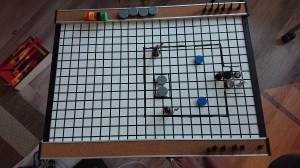


Not pictured here, is that simultaneously I was getting even more into 3D printing. The realisation that with this machine I could start bringing terrain and monsters to life even more vividly really got me further down a rabbit hole. From trees to walls to people. You can truly find anything you need, and bring it to life if you have the patience. At the kind of budget that most of us hobby-ists can actually afford.
Fast Forward
Over the years, I have moved things around. Games starting and ending. Players coming in and out. Stories resolving in mostly satisfactory ways. A story ever D&D player is familiar with. At the same time, my comfort with different types of technologies has changed, and my willingness to put in effort has evolved. There was a period of time when I had OBS up and running, and kind of “green screened” the map into the background of my own video in Discord to try that. I played with different music bots, and microphone setups. In the end, the most reliable method I have found is very simple. I have a capture card which turns my DSLR Camera into a webcam, and I open the Camera app on my computer and do a screen share of that.

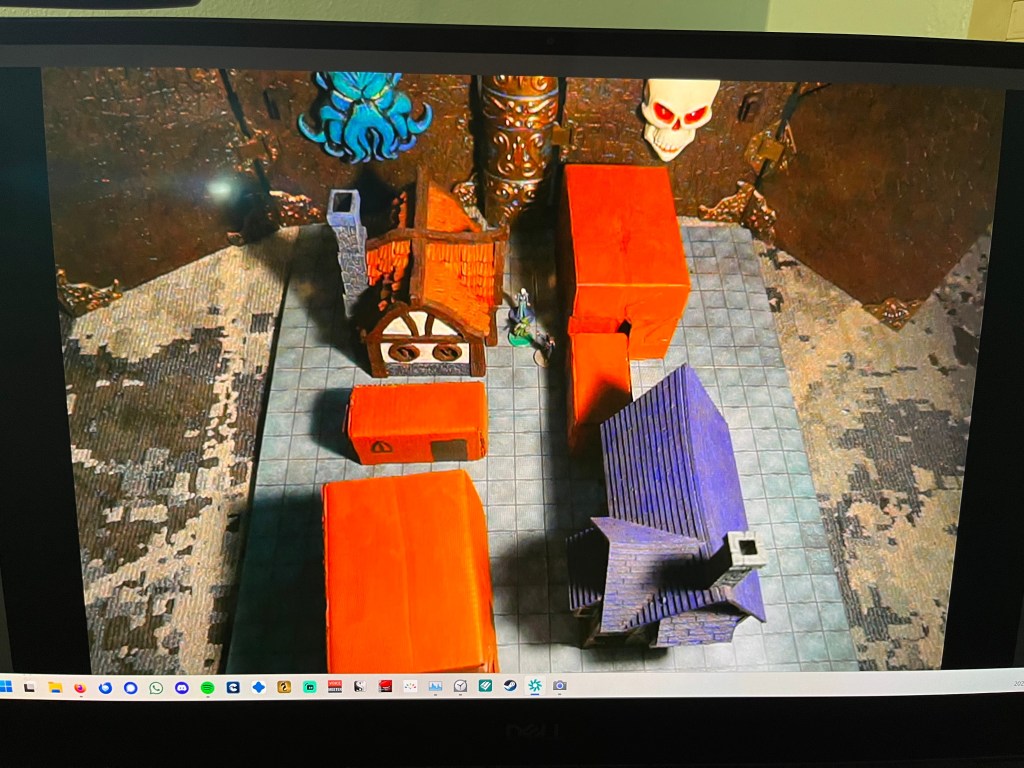
This means I have been able to put my focus into the part of map making that I really enjoy. Making maps. Well, painting things and making things. I’m a crafter far more than I am a person who enjoys AV “stuff”. It is one of the reasons I can write a blog, but could never start a YouTube channel! The AV and editing for video creation is not in my interest list.
It started with an inkjet printer, and printing out the maps from source books to scale. Cutting off the margins, and taping them together. I’m not really a big fan of the waste this creates though. Many of the maps are good for a session or two, and then that “dungeon” has been cleared, and the players move on. Also, you don’t always want to build out, or print out, endless corridors. You want to be able to focus in for a battle, and return to theatre of the mind for something else. I certainly mix and match now, between sprawling dungeon crawls with always visible maps, and theatre of the mind in towns or travelling. Paper is great, but it isn’t very re-usable.
I used the same strategy to create a flip mat of my own – I printed and cut all the pieces, stuck them together, and then carefully laminated it with contact sticky plastic. With the added bonus of working with most markers, I knew I was on the right track. I eventually sourced at least one actual flip mat to serve as a neutral base, and this worked great. You set up the boundaries with a marker, use 3D printed terrain to add depth and scale, and tada.
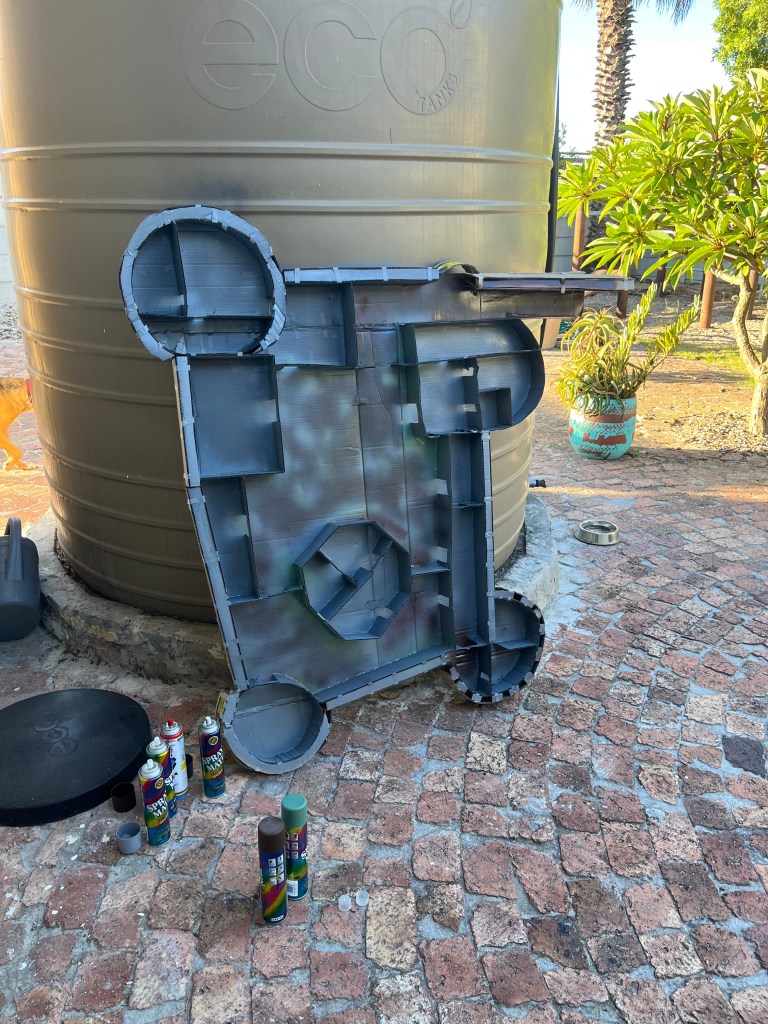
As adventurers level up, so do their battle locations. The dungeon which was scary at level 3 is small at level 5. By the time you’re hitting level 8 and up, most flip mats just aren’t going to cut it. So, when I realised that my players were spending months at the same castle, I could spend some time actually making a scale version of the castle out of cardboard. I needed to do this because I realised that to scale, if I actually built the whole thing, it should be almost 3m long. Cut off some excess which they have already bypassed, and we’re still looking at something which is well over a metre. For the amount of time they spent there, I really should have started sooner. The cardboard castle was, nevertheless, a lot of fun.




What Now?
Scale matters. My players like to be able to have these huge maps, and I like making them. So eventually, I decided to try my hand at this resin thing. I figured that it should have the same “white board” effect that I was looking for, and allow me to build a board much bigger than I otherwise could. As is the nature of most such projects, it didn’t go nearly as smoothly as I might have liked. It did essentially (eventually) work though. I have a 1,2m square board which I can pull out to set up maps for games in set locations. Or I have smaller flip maps for random encounters along a travel scene. I can set up a camera in about two minutes to point at it, and we can have a remote game. Or, if my players are all in town (now we have one player in the UK, and three of us in Cape Town), they can gather in my nerd-cave and we can have the same maps in front of them as they play.


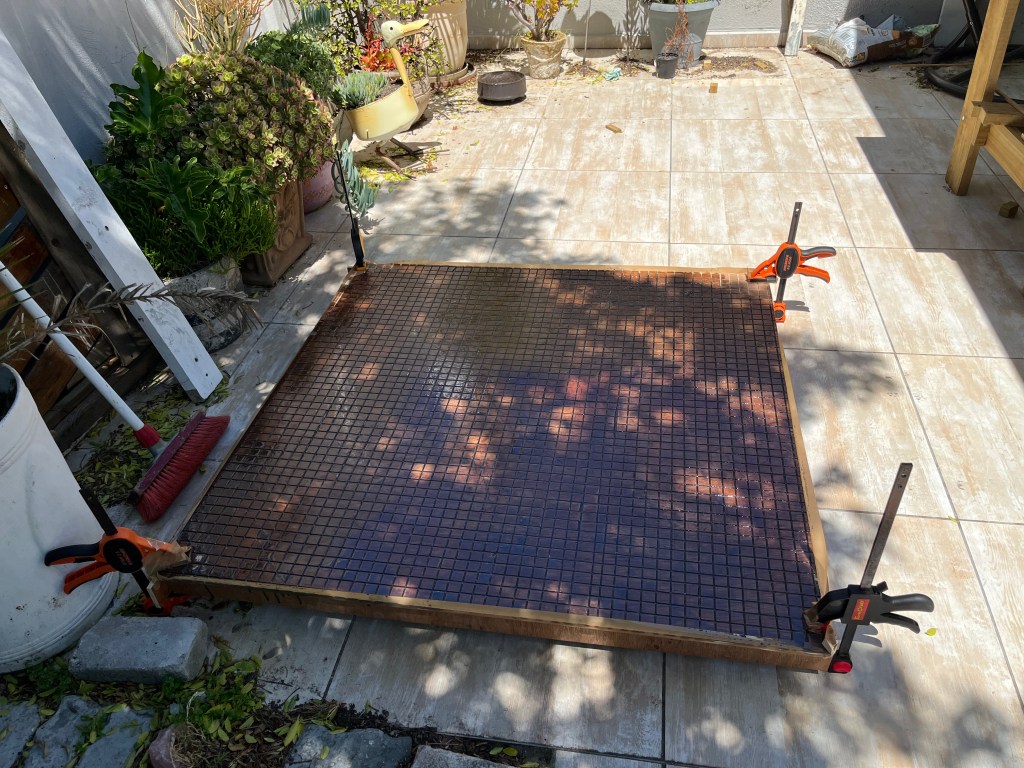


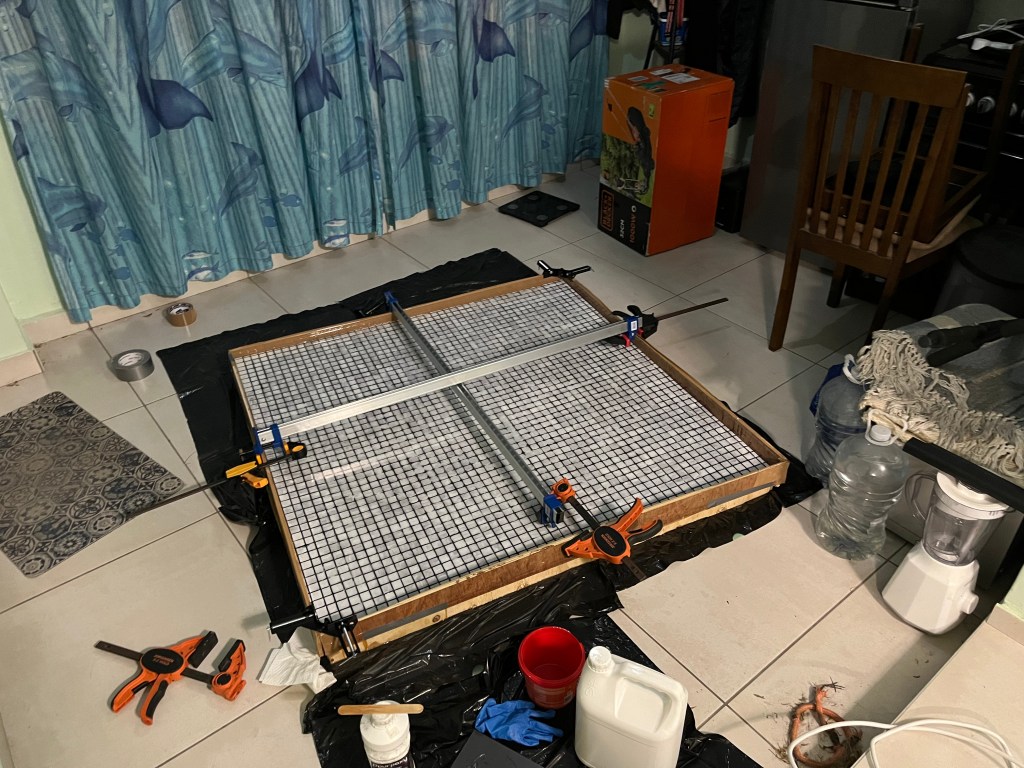
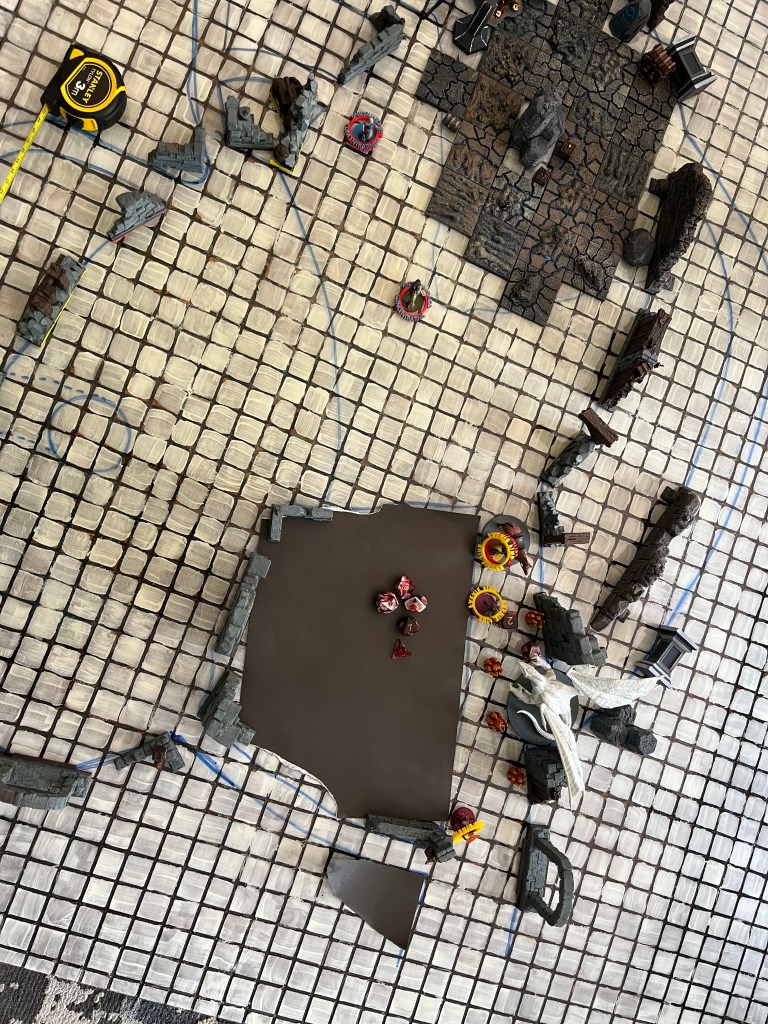


Of course, this means I’m being told I need to build a proper gaming table. I don’t disagree, the excuse I’m using is that I need to build a display cabinet to keep the dust of my collection of miniatures and other nerdy figurines first. I’ll get there. My current philosophy in life is that not everything has to happen right now. There is time for things to come as they may, and the timing will be right when it happens.
 Pippa Hillebrand